Tuesday, September 30, 2008

Affection as told by C.S. Lewis


"...But Affection has its own criteria. Its objects have to be familiar. We can sometimes point to the very day and hour when we fell in love or began a new friendship. I doubt if we ever catch Affection beginning. To become aware of it is to become aware that it has already been going on for some time. The use of "old" or vieux as a term of Affection is significant. The dog barks at strangers who have never done it any harm and wags it tail for old acquaintances even if they never did it a good turn. The child will love a crusty old gardener who has hardly ever taken any notice of it and shrink from the visitor who is making every attempt to win its regard. But it must be an old gardener, one who has "always" been there--the short but seemingly immemorial "always" of childhood.

Affection as I have said, is the humblest love, It gives itself no airs. People can be proud of being "in love," or of friendship. Affection is modest--even furtive and shame-faced. Once when I had remarked on the affection quite often found between cat and dog, my friend replied, "Yes. But I bet no dog would ever confess it to the other dogs." That is at least a good caricature of much human Affection. "Let homely faces stay at home," says Comus. Now Affection has a very homely face. So have many of those for whom we feel it. It is no proof of our refinement or perceptiveness that we love them; nor that they love us. What I have called Appreciative love is no basic element in Affection. It usually needs absence or bereavement to set us praising those to whom only Affection binds us. We take them for granted: and this taking for granted, which is an outrage in erotic love, is here right and proper up to a point. It fits the comfortable, quiet nature of the feeling. Affection would not be affection if it was loudly and frequently expressed; to produce it in public is like getting your household furniture out for a move. It did very well in its place, but it looks shabby or tawdry or grotesque in sunshine. Affection almost slinks or seeps through our lives. It lives with humble un-dress, private things; soft slippers, old clothes, old jokes, the thump of a sleepy dog's tail on the kitchen floor, the sound of a sewing-machine, a gollywog left on the lawn."

--from the "Four Loves" pp. 33-34.

Saturday, September 13, 2008

Excellent Intelligent Design Video

Below is an excellent intelligent design video with cell animation. I got this video from The County Shrink's blog.


"This is absolutely mind-boggling to perceive at this scale of Science such a finely-tuned apparatus that bares the marks of intelligent design..."

Thursday, September 11, 2008

Subliminal Messages Work, at Least Sometimes


Photo by Walter Daran/Time Life Pictures/Getty Images

from the AFP


Aug. 28, 2008 -- Attempts to manipulate consumers with subliminal messages, flashed onto movie or TV screens, once thrilled advertisers and panicked the public, but the furor faded when the technique failed to work.

But a study published on Thursday has given what is claimed to be the first evidence to the contrary -- that our decisions can, in fact, be influenced by subconsciously perceived cues.

An unusual experiment, recounted in the British-based journal Neuron, could go a long way to explaining the mystery of what is often called intuition, its authors say.

"Humans frequently invoke an argument that their intuition can result in a better decision than conscious reasoning. Such assertions may rely on subconscious associative learning," said lead author Mathias Pessiglione of University College London.

For example, a poker player who somehow always knows when to fold or call a bluff may be picking up on telltale signals from his opponents, using a part of his brain unrelated to conscious thought.

Previous studies have shown that people, like rats or dogs, could be conditioned to respond to unconsciously perceived stimuli. A subliminal image linked to an electrical shock, for example, will -- after repeated jolts -- cause a person's palms to sweat with anticipation.

But these are so-called "automatic" responses that do not involve conscious thought.

The new study is the first to show that such cues can influence deliberate choices too.

In the experiment, 11 men and nine women aged 18 to 39 were repeatedly exposed to one of two symbols sandwiched between a pair of abstract images.

The symbols flashed for only 33 or 50 milliseconds, not long enough to be consciously perceived.

After seeing each trio of images, the volunteers -- told to "follow their instincts" -- had the option of pressing on a button, knowing that one of the symbols corresponded to winning money, and the other to losing one.

About half way through each "learning session," which consisted of 120 decisions, most volunteers began to earn money, which they had been told they could keep.

On average, they made the "right" choice 63 percent of the time, though some individuals scored far better than others.

Pessiglione used magnetic resonance imaging (MRI) to find out what part of the brain was activated during the experiments and found that a region called the ventral striatum responded to the subliminal visual cues.

"Even without conscious processing of contextual cues, our brain can learn their reward value and use them to provide a bias on decision making," he said.

The study implies that humans may not be immune to the kind of subtle, below-the-threshold-of-awareness marketing that, in the 1950s, fired the imagination of advertising executives.

Provided they were reinforced with simultaneous rewards, subliminal advertising could probably influence some of the choices we make, Pessiglione said.

http://dsc.discovery.com/news/2008/08/28/subliminal-message.html

Monday, September 8, 2008

Attending an Opera the classical way

from daily@delancey.com


In today's excerpt--audiences at a classical music
performance:


"The modern classical-music performance, as
audiences have come to know it and sometimes to
love it, adheres to a fairly rigid format. ... The audience
is expected to remain quiet for the duration of each
work, and those who applaud between movements
may face embarrassment. Around ten o'clock, the
audience claps for two or three minutes, the
performers bow two or three times, and all go
home. ...


"[However], before 1900 concerts assumed a quite
different form. ... Here is [James] Johnson's evocation
of a night at the Paris Opéra in the years before the
French Revolution:


" 'While most were in their places by the end of the first
act, the continuous movement and low din of
conversation never really stopped. Lackeys and young
bachelors milled about in the crowded and often
boisterous parterre, the floor-level pit to which only
men were admitted. Princes of the blood and dukes
visited among themselves in the highly visible
first-row boxes. Worldly abbés chatted happily with
ladies in jewels on the second level, occasionally
earning indecent shouts from the parterre when their
conversation turned too cordial. And lovers sought the
dim heights of the third balcony--the paradise--away
from the probing lorgnettes.'


"In other words, the opera served mainly as a
playground for the aristocracy. The nobles often
possessed considerable musical knowledge, but they
refrained from paying overt attention to what the
musicians were doing. Indeed, silent listening in the
modern sense was deemed déclassé. ...


'Public concerts didn't become widespread until after
1800, and well into the nineteenth century they took
the form of "miscellanies"--eclectic affairs at which all
kinds of music were played before audiences that
seldom sat still or quieted down. ... Applause usually
erupted after
movements, and at times during them, if the audience
heard something it particularly liked.


"What changed? ... To some extent, these changes
can be explained in anthropological terms: by
applauding here and not applauding there, the
bourgeois were signalling their membership in a
social and cultural élite. As Johnson points out, they
felt obliged to reconfirm that status from year to year,
since, unlike the aristocrats of yore, they lived in fear of
going back down the ladder. 'The bourgeoisie isn't a
class, it's a position,' the Journal des Débats
advised. 'You acquire it, you lose it.' Attending
concerts became a kind of performance in itself, a
dance of decorum."


Alex Ross, "Why So Serious?" The New Yorker,
September 8, 2008, pp. 79-80.


To visit our homepage or sign up for our
daily email click here: http://rs6.net/tn.jsp?e=001nNXcFec4KeuGU8DinC5MnwZe2Jn95WHM9DZsocema_Sfil8QaLmXX3uN4-J_DbjhMCRXwGx5DKubbQeYuCw7mG1pM5sfFHJRzjJOGeExNxWD_VcFDHDOqQ==

To view previous daily emails click
here: href="http://rs6.net/tn.jsp?e=001nNXcFec4KetCa1ss6MS7Fwe6zeh-fjqYxO0wMM2IDr-THL4DquJcgejGU73XAjBmi27Kx_HvozTx7egVsuj6zBLccRgPLUZ9wsTqHINvZmwrX5v5flaw_VHzvG3pt0dLUia3nmZ_pvNHRmBvdEXKZNejHn6i6PkNOol5FWNwi2g=.

Saturday, September 6, 2008

Double Standards

Here's a forwarded email to me from Nancy Walls of P3 Music, Ltd. about the latest album of Martin Taylor: the "Double Standards". Martin Taylor is dubbed as "the Europe's finest acoustic guitarist" by JAZZTIMES, New York. Martin Taylor has been my favorite since I was introduced to acoustic jazz.

Greetings!

We all know that there are two sides to every story, but in the case of Martin Taylor's new video, both sides of the story bear a striking resemblance. The video to "Drop Me Off At Harlem" , taken from his forthcoming album "Double Standards" features Martin performing a guitar duet with the only guitarist he could find that could match him in both style and texture...
someone who could even wear the same shoes and glasses as him, and, who had exactly the same guitar. He won't tell us the name of this ultra-talented newcomer, but there is something very familiar about his face. The video is exclusively available on YouTube right now, so take a peek and let us know if you can identify the second guitarist!


http://www.youtube.com/watch?v=wQEWJpBBJMQ


It has taken more than thirty years for guitarist Martin Taylor to feel that the time was right to record an album he always planned to release. 'Double Standards' is Taylor's first solo album in five years and his most personal and expressive album to date. Featuring two separate, overdubbed guitar tracks, Taylor has created a guitar duo album consisting only of himself.
'Double Standards' highlights why Taylor has been described as "THE acoustic guitarist of his generation" and collaborated with a diverse range of artists including Stephane Grappelli, Chet Atkins, Jeff Beck, Joe Pass, Bill Wyman, Dionne Warwick, Bryn Terfel and Jamie Cullum. The album will be released by The Guitar Label in North America on the 9th September, Europe on the 20th October and by Sony Jazz in Asia on the 26th November.

The tracks on the album are all very personal to Martin and were chosen by taking great memories and key points in his career. Some tunes like "Drop Me Off At Harlem" and "Jive At Five" date back to his earliest performances in 1978 when, at twenty two years old, he performed alongside his guitar mentor Ike Isaacs as the first ever resident musicians at the now legendary "Pizza On The Park" in London.

"I've recorded duets before using overdubbed guitars, I even did it once with 22 (guitars), but I am so pleased with the way this record has turned out. This is the record that I have wanted to make for ages and it's even better than my expectations." - Martin Taylor 2008


Track Listing:

1 Triste
2 Bluesette
3 Young And Foolish
4 Drop Me Off At Harlem
5 Alfie
6 When I Take My Sugar
To Tea
7 Someone To Watch Over
Me
8 Alice In Wonderland
9 Estate
10 Jive At Five
11 I Fall In Love Too Easily
12 Just Friends

He's indeed absolutely inspiring.

Friday, September 5, 2008

Duck stamp number sends callers to sex line

Story Highlights
Phone number was written in letter and number form
The number listed in all numerals led callers to 1-800-TRAMP24
Card did also correctly list number as 1-800-STAMP24
The Fish and Wildlife Service, in charge of program, printed 3.5 million cards

WASHINGTON (AP) -- People calling a federal phone number to order duck stamps are instead greeted by a phone-sex line, due to a printing error the government says would be too expensive to correct.

The carrier card for the duck stamp transposes two numbers, so instead of listing 1-800-782-6724, it lists 1-800-872-6724. The first number spells out 1-800-STAMP24, while the second number spells out 1-800-TRAMP24.

People calling that second number are welcomed by "Intimate Connections" and enticed by a husky female voice to "talk only to the girls that turn you on," for $1.99 a minute.

Duck stamps, which cost $15 apiece, are required to hunt migratory waterfowl. The government uses nearly all the revenue to purchase waterfowl habitat for the National Wildlife Refuge System. In 2006-2007, the latest figures available, duck stamp purchases brought in nearly $22 million.

This year's stamps, which feature a pair of northern pintail ducks, went on sale July 1 and are good through June 30 of next year. The error will not be corrected until next year's duck stamps.

The Fish and Wildlife Service, which administers the program, printed about 3.5 million duck stamps attached to cards with the wrong number. An agency spokeswoman, Rachel Levin, said it would cost $300,000 to reprint them.

"I don't know that it would be worth it to do a reprint," she said Thursday. "That's a lot of money we can be using for wildlife conservation. With all of the needs for conservation, it doesn't make sense to divert money away from an important cause." For those people who like to dial by letter, the card does include the proper 1-800-STAMP24.

"As best we know, it was a typographical error that was not caught," Levin said, stressing that the stamps are still valid.

The agency first learned of the mistake a few days ago, when a duck stamp owner informed them about the glitch. Levin said the agency has not received any complaints.

The error, which was first reported Wednesday by Denver TV station KUSA, is limited to self-adhesive versions of the stamps. The moistened version, which is printed in much smaller numbers, does not come with a carrier card.

The government uses a contractor, Ashton Potter Security Printers of Williamsville, New York, to print the duck stamps. Levin said she did not know whether the error was made by the government or by the company.

Ashton Potter's president and chief executive, Barry Switzer, said that the company was provided with the wrong telephone number.

"We reproduced the wrong number correctly," he said. "We regret this whole situation happened, but we did our job properly."

Copyright 2008 The Associated Press. All rights reserved.This material may not be published, broadcast, rewritten, or redistributed.

Links referenced within this article

The Fish and Wildlife Service
http://topics.edition.cnn.com/topics/U_S_Fish_and_Wildlife_Service
Associated Press
http://edition.cnn.com/interactive_legal.html#AP
U.S. Fish and Wildlife Service
http://topics.edition.cnn.com/topics/U_S_Fish_and_Wildlife_Service


Find this article at:
http://edition.cnn.com/2008/US/09/04/duck.stamps.ap/index.html

And yes somewhere over that rainbow...

there I find...

Thursday, September 4, 2008

Good things come

To those who wait.

My all-time favorite acoustic guitarist, Mr. Tommy Emmanuel.

Wednesday, September 3, 2008

Down by the Sally Gardens


A truly beautiful, albeit sad Irish song.

It was down by the salley gardens my love and I did meet;
She passed the salley gardens with her little snow-white feet.
She bid me take life easy, as the leaves grow on the tree;
But I, being young and foolish, with her would not agree.
In a field down by the river my love and I did stand,
And on my leaning shoulder she laid her snow-white hand.
She bid me take love easy, as the grass grows on the weirs;
But I was young and foolish, and now am full of tears.

Tuesday, September 2, 2008

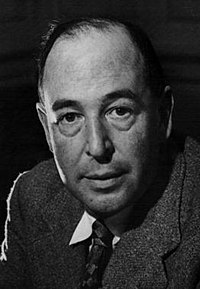
Clive Staples Lewis


I believe in Christianity as I believe that the sun has risen. Not only because I see it, but because by it I see everything else.
"Is Theology Poetry?" (1945)


(1898-1963), was one of the intellectual giants of the twentieth century and arguably the most influential Christian writer of his day. He was a Fellow and Tutor in English literature at Oxford University until 1954 when he was unanimously elected to the Chair of Medieval and Renaissance English at Cambridge University, a position he held until his retirement. His major contributions in literary criticism, children's literature, fantasy literature, and popular theology brought him international renown and acclaim. He wrote more than thirty books, allowing him to reach a vast audience, and his works continue to attract thousands of new readers every year. His most distinguished and popular accomplishments include The Chronicles of Narnia, Out of the Silent Planet, The Four Loves, The Srewtape Letters, and Mere Christianity.
Above text is from the Mere Christianity back cover.

References:
www.cslewis.com
This article is licensed under the GNU Free Documentation License. It uses material from the Wikipedia article "Clive Staples Lewis".
C.S. Lewis photo from wikimedia